If you’re an employer sponsoring overseas talent – or a skilled worker hoping to secure sponsorship, the employer sponsored visa Australia July 2026 update is the most important migration news of the year.
From 1 July 2026, the Australian Government reshaped its Permanent Migration Program in a way that puts employer sponsorship squarely at the centre of the country’s skilled migration strategy. At the same time, it raised the cost and salary bar for getting there.
Here’s a breakdown of the key July 2026 employer-sponsored visa changes, what they mean for employers and skilled workers, and how they may affect the following visa pathways:
- Subclass 482 (Skills in Demand)
- Subclass 186 (Employer Nomination Scheme)
- Subclass 494 (Skilled Employer Sponsored Regional)
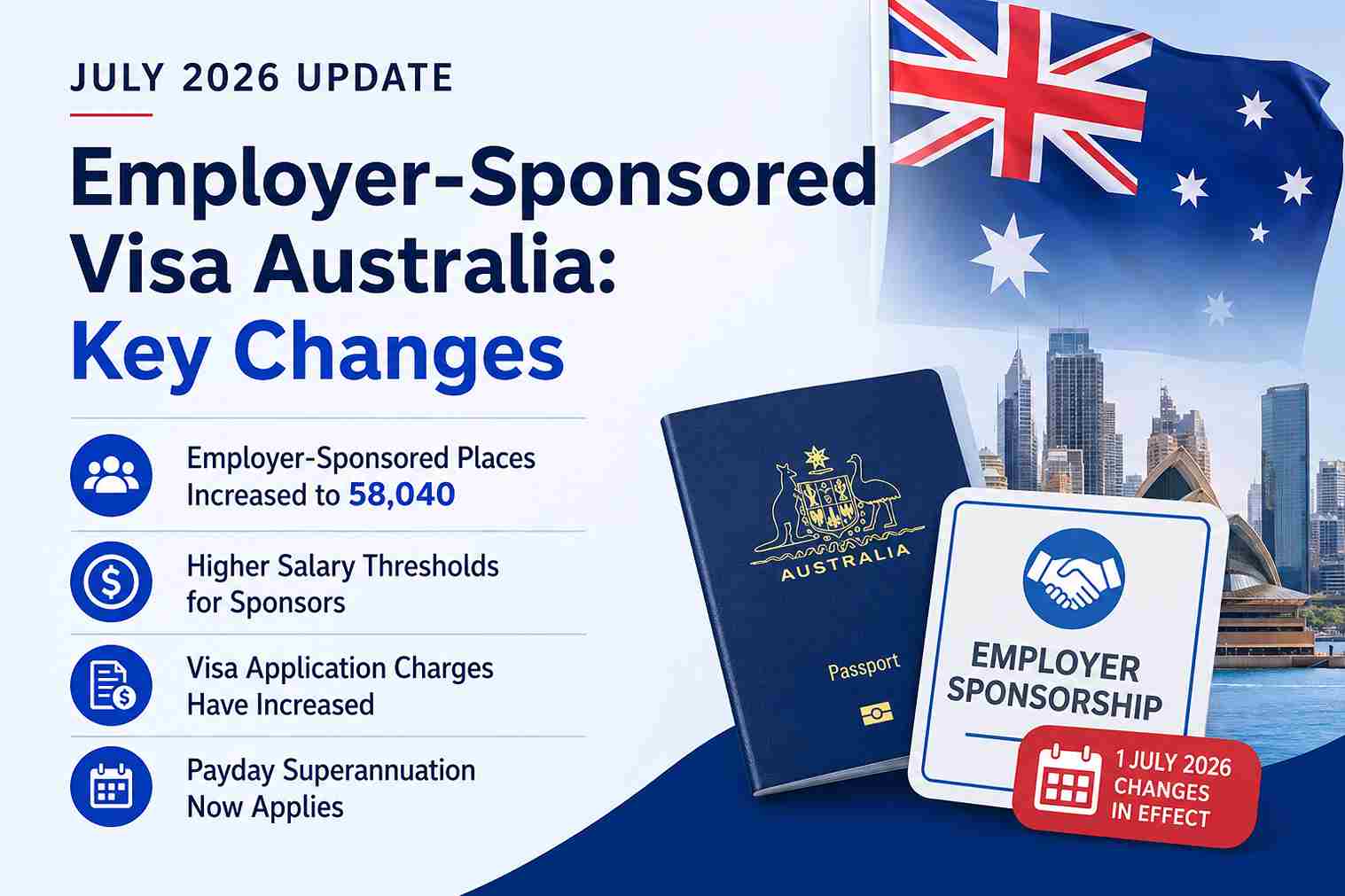
Employer-Sponsored Places Jump to 58,040
The headline figure from this year’s Australia employer sponsored visa places 2026 allocation is striking:
Employer-sponsored places within the 2026–27 Permanent Migration Program have increased from 44,000 to 58,040 – a jump of over 14,000 places in a single year.
The overall Migration Program remains steady at 185,000 places. That means this increase came from a deliberate reallocation toward direct employer sponsorship, rather than an expansion of the total program size.
This is a clear policy signal. Rather than relying primarily on points-tested, independent skilled migration, the government is leaning further into direct employer sponsorship as its preferred mechanism for filling skill shortages.
For employers already sponsoring staff – or considering it for the first time – this means more room in the system and, in theory, a smoother path through the pipeline over the coming year.
Higher Salary Thresholds for Sponsors
Growth in available places comes with a cost: sponsors now need to meet higher minimum salary requirements. As part of the broader Australian migration update July 2026, the key thresholds have all been indexed upward:
| Threshold | New (2026–27) | Previous | Applies to |
Core Skills Income Threshold (CSIT) | $79,423 | $76,515 | 482, 186 nominations |
Specialist Skills Income Threshold (SSIT) | $146,576 | $141,210 | Specialist Skills stream |
Temporary Skilled Migration Income Threshold (TSMIT) | $79,423 | $76,515 | 494 nominations |
These thresholds represent the minimum income requirements for relevant employer-sponsored nominations. Employers must also ensure the nominated position meets the Annual Market Salary Rate (AMSR) requirements, where applicable. The updated thresholds apply to new nominations lodged on or after 1 July 2026, while nominations lodged before that date are generally assessed under the previous requirements.
If you’re an employer planning a new sponsorship this financial year: budget for these updated figures now, particularly if the role sits close to the old threshold line.
Fair Work High Income Threshold Also Rose
The Fair Work High Income Threshold (FWHIT) increased from $183,100 to $190,100.
This may be relevant for certain Subclass 482 visa holders aged 45 and over seeking permanent residence through the Employer Nomination Scheme (Subclass 186) Temporary Residence Transition stream. In some circumstances, an age exemption may be available where the applicant has received earnings at or above the FWHIT for the required period and all legislative requirements are met.
Employers should factor this into planning for long-term sponsorship pathways.
Visa Application Charges Have Increased
Sponsors and applicants alike need to budget for higher government fees. Visa Application Charges for employer-sponsored visa subclasses increased from 1 July 2026, following changes introduced under the Home Affairs Legislation Amendment (2026 Measures No. 1) Regulations 2026. The exact amount payable depends on the visa subclass and the applicant’s circumstances.
The exact amount payable depends on:
- The visa subclass
- The application type
- The number of applicants included (additional charges may apply for eligible family members)
Always check the latest fees on the Department of Home Affairs website before lodging.
Applicants should also budget for other potential costs, depending on individual circumstances:
- Skills assessments
- English language tests
- Health examinations
- Police clearances
Employers who cover or contribute to visa costs as part of a sponsorship package should revise their budgets to reflect the new figures.
Payday Superannuation Now Applies to Sponsored Staff
A less-discussed but practical change: from 1 July 2026, employers must pay superannuation contributions on every payday, within seven business days, rather than quarterly.
This generally applies to eligible employees under Australian employment law, including sponsored workers where applicable.
For sponsors, this is a compliance change worth building into payroll processes now. Sponsored workers’ super entitlements will compound faster and are easier to track and verify, which also means less room for administrative oversights to go unnoticed.
What This Means for Employers and Sponsored Workers
Taken together, this Australian immigration July 2026 update sends a clear message:
- The government is opening the door wider for employer-sponsored migration
- At the same time, it’s raising the financial bar to walk through it
The increased allocation may provide greater opportunities for eligible employers to sponsor skilled workers, provided all legislative and sponsorship requirements are met. Higher salary thresholds and visa charges mean sponsorship needs to be planned and budgeted with more precision than in previous years.
For employers, the practical takeaway is to:
- Plan nominations early in the financial year
- Confirm salary packages meet the new thresholds before lodging
- Build the updated visa charges into recruitment budgets
For skilled workers seeking sponsorship, it’s worth discussing salary expectations openly with prospective employers in light of these changes, since meeting the correct threshold is now essential to a successful nomination.
Need help with an Employer-Sponsored Visa in Australia?
Get in touch with our team for tailored guidance on Subclass 482, 186, and 494 applications under the 2026–27 settings.
FAQs
1. What changed for employer-sponsored visas from 1 July 2026?
Ans: Employer-sponsored visa places increased to 58,040, income thresholds were updated, Visa Application Charges increased, and other migration-related changes took effect from 1 July 2026.
2. How many employer-sponsored visa places are available in 2026–27?
Ans: The Australian Government allocated 58,040 employer-sponsored visa places for the 2026–27 Permanent Migration Program, highlighting a stronger focus on employer-sponsored skilled migration.
3. What is the new Core Skills Income Threshold (CSIT)?
Ans: From 1 July 2026, the Core Skills Income Threshold (CSIT) increased to $79,423 for eligible employer-sponsored visa nominations.
4. Did Visa Application Charges increase in July 2026?
Ans: Yes. Visa Application Charges increased from 1 July 2026. The exact amount depends on the visa subclass and applicant’s circumstances.
5. Do the new income thresholds apply to existing nominations?
Ans: Generally, no. The updated income thresholds apply to new nominations lodged on or after 1 July 2026, not earlier nominations.
This article contains general information only and does not constitute migration or legal advice. Visa requirements, application charges and policy settings may change. Always refer to the Department of Home Affairs or seek advice from a registered migration agent regarding your individual circumstances.
Also Read: Decision-Ready Application Guides for Employer Sponsored Visas