Australia has a new skilled visa processing framework that gives higher processing priority to skilled workforce in specific industries like construction, health care, teaching, agriculture, aquaculture and fisheries, and resources.
These new rules came into effect on September 19, 2026 with the issue of Ministerial Direction 122, by the Department of Home Affairs, Australia. This Direction defines the order of processing of some provisional and permanent skilled visas.
With these new changes, certain skills and occupations will be prioritized for processing. Prioritizing does not guarantee an applicant will be issued a visa or an invitation for permanent residency.
Below we summarize the new changes, how it will impact the prioritized industries, the visa subclasses, and what prospective migrants should consider before applying for a skilled visa.
Key Highlights of Australia’s Skilled Visa Priority List 2026
| Key detail | Information |
|---|---|
| New processing direction | Ministerial Direction 122 |
| Effective date | 19 September 2026 |
| Priority sectors | Construction, healthcare, teaching, agriculture, aquaculture, fishing and resources |
| Other priority areas | Australia’s law enforcement and defence interests |
| Visa subclasses covered | 186, 187, 189, 190, 191, 489, 491, 494, 887 and 888 |
| Onshore applicants | Generally receive second-tier priority if their application does not qualify for the first tier |
| Offshore applicants | May fall into the third tier, subject to the direction’s conditions |
| Guaranteed visa approval | No |
Which Occupations and Industries Receive Priority in Australia?
Under Ministerial Direction 122, applications associated with seven major industry sectors receive the highest processing priority. Certain applications connected with Australia’s law enforcement and defence interests are also included.
The priority categories are as follows.
1. Construction
This new rule focuses on the construction industry in Australia, which involves a range of construction and engineering professionals. These professionals include construction and building technicians, electricians, architects and civil engineers.
2. Healthcare
Healthcare is another priority sector. It encompasses eligible health professionals and certain healthcare support occupations.
There are a number of relevant occupational groups including health professionals, allied health professionals, psychologists and social workers, and specified aged care and nursing support occupations.
Applicants should be mindful of the requirements for professional registration (if any), qualification recognition, English language and skills assessment prior to lodging an application.
3. Teaching
There is also a priority framework for qualified teachers and other related professions.
Teaching professions encompass school teachers and other professions including child care centre managers, school principals, and university lecturers, and child care workers.
There are other professions in the education sector that do not qualify for priority processing and applicants should verify their occupation classification and the requirements in the ministerial direction.
4. Agriculture
The ministerial direction has recognized agriculture and related primary industries as a supporting sector for food production.
The direction identifies roles directly involved in agricultural production or productivity, including crop or livestock farming, agricultural production support and supervision, and irrigation, to name a few.
Being employed in an agricultural business is not sufficient for an occupation to qualify for priority processing.
5. Aquaculture and Fishing
Aquaculture and fishing are included in the new framework.
According to the direction, the sectors cover aquatic and primary production, breeding, management and harvesting or capturing, to name a few.
Candidates need to confirm for themselves that their role meets the criteria and are not reliant on their employer to define roles by industry or job title.
6. Resources
The resources sector comprises eligible occupations directly related to the exploration, extraction and production of minerals, oil, gas and coal, along with certain mine closure and rehabilitation activities.
Examples of relevant occupational groups include mining engineers, geologists, geophysicists, hydrogeologists, drillers and miners, along with specified metallurgical and fitting occupations and surveyors.
The position must be defined as a resources sector position in the direction.
7. Australia’s law enforcement and defence interests
The direction also encompasses certain applications relating to Australia’s law enforcement and defence interests.
This is a defined policy category, as opposed to being a general security or defence priority. The police category covers certain police occupations and the applicant is endorsed or sponsored by the relevant police force in Australia. Defence eligibility is subject to defined conditions.
Important: These sectors are not a guarantee that every occupation within an industry receives priority. The nominated occupation and the direction’s specific definitions determine whether an application qualifies.
How Does the New Skilled Visa Processing Priority Order Work?
Ministerial Direction 122 establishes four processing tiers for the covered provisional and permanent skilled visa applications.
| Priority tier | Who receives priority? |
|---|---|
| Tier 1 | Applications connected with the specified priority sectors or Australia’s law enforcement and defence interests |
| Tier 2 | Applicants who were physically in Australia when they lodged their application, provided they do not qualify for Tier 1 |
| Tier 3 | Primary applicants who were outside Australia at lodgement and whose application is not combined with another person’s application at any time |
| Tier 4 | All other applications |
This means that an eligible applicant working in a priority occupation may receive first-tier processing consideration whether they apply from inside or outside Australia.
Applicants who do not qualify for the first tier are considered under the remaining categories, depending on their circumstances.
However, priority processing does not guarantee a decision within a particular number of weeks or months. Processing times can vary depending on the completeness of the application, verification requirements and the department’s workload.
Which Australian Visa Subclasses Are Covered?
Ministerial Direction 122 applies to the following ten visa subclasses.
| Visa subclass | Visa name | General pathway |
|---|---|---|
| 186 | Employer Nomination Scheme | Permanent employer-sponsored visa |
| 187 | Regional Sponsored Migration Scheme | Legacy regional employer-sponsored pathway |
| 189 | Skilled Independent | Points-tested permanent visa |
| 190 | Skilled Nominated | State or territory-nominated permanent visa |
| 191 | Permanent Residence (Skilled Regional) | Permanent residence for eligible regional visa holders |
| 489 | Skilled Regional (Provisional) | Legacy regional skilled visa |
| 491 | Skilled Work Regional (Provisional) | Provisional regional skilled visa |
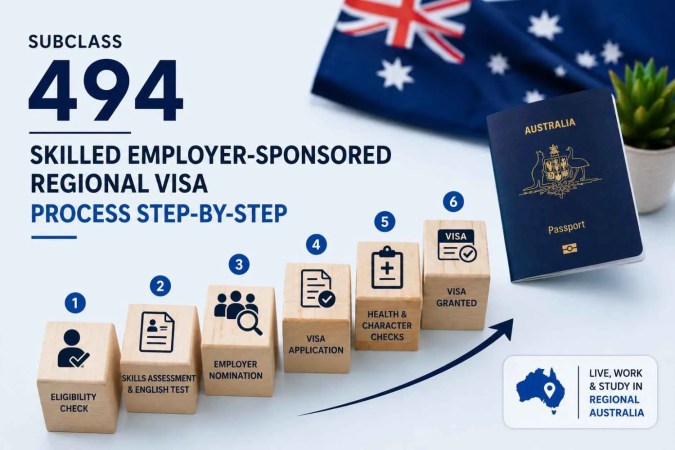
| 494 | Skilled Employer Sponsored Regional (Provisional) | Regional employer-sponsored visa |
| 887 | Skilled Regional | Permanent residence pathway for eligible visa holders |
| 888 | Business Innovation and Investment (Permanent) | Permanent business and investment visa pathway |
The inclusion of these subclasses does not mean that every visa or stream remains open to new applications. Some are legacy pathways, and applicants must check the current availability and requirements of the specific subclass and stream.
It is also important to distinguish the subclass 482 Skills in Demand visa from this list. Temporary skilled visa processing priorities are covered separately under Ministerial Direction 121.
Does Being on the Priority List Guarantee Australian PR?
No, it doesn’t. Being in a priority sector impacts the order of processing, not the main eligibility criteria for a visa.
Applicants must still meet the conditions of the visa they intend to apply for. Depending on the pathway, these may include:
- An eligible occupation under the relevant visa program.
- A positive skills assessment, where required.
- Relevant qualifications and skilled work experience.
- English-language requirements.
- A points-tested invitation, where applicable.
- State or territory nomination, where required.
- An eligible employer nomination or sponsorship, where applicable.
- Health, character and other visa requirements.
Apart from these, there are other eligibility criteria like the health and character requirements, among others.
For example, a construction worker in Australia may be in a priority sector, but this doesn’t mean he or she will be granted a permanent residence visa for this reason. The same can be said for the offshore healthcare worker.
Skilled migrants should determine their available options before making a migration decision.
What Should Skilled Workers Do Next?
If you are considering skilled migration to Australia, the following steps can help you understand your options.
1. Identify your occupation. Check that your nominated occupation accurately reflects your qualifications, work experience and actual duties.
2. Review the relevant occupation list. Confirm that your occupation is eligible for your intended visa subclass. The priority sectors under Ministerial Direction 122 are not a replacement for the official skilled occupation lists.
3. Check your visa options. Compare the requirements for independent, state-nominated, employer-sponsored and regional pathways.
4. Prepare your documents. Depending on the visa, you may need qualifications, employment references, English test results, skills assessment documents and other supporting evidence.
5. Check the current rules. Visa availability, eligibility criteria and processing priorities can change. Always refer to official government information before lodging an application.
6. Seek professional advice if necessary. If your circumstances involve complex employment, sponsorship or visa conditions, consider consulting an appropriately qualified Australian migration professional.
Frequently Asked Questions
Which occupations receive priority for Australian skilled visas in 2026?
The priority sectors under Ministerial Direction 122 are construction, healthcare, teaching, agriculture, aquaculture, fishing and resources. Certain applications connected with Australia’s law enforcement and defence interests are also included.
When did the new skilled visa processing rules begin?
The new processing priorities took effect on 19 September 2026.
Does the priority list apply to permanent residency visas?
Yes. Ministerial Direction 122 covers specified provisional and permanent skilled visa subclasses, including subclasses 186, 189, 190, 191, 491 and 494.
Do offshore applicants in priority occupations receive priority?
Yes. Eligible applications in the first-tier sectors receive the highest priority regardless of whether the applicant was inside or outside Australia when lodging. Other offshore applications are considered under the relevant lower tiers.
Is the subclass 189 visa included?
Yes. The Skilled Independent visa (subclass 189) is covered by the direction. Applicants must still meet the relevant eligibility, points-tested and invitation requirements.
Where can I check the official processing rules?
The Department of Home Affairs publishes the current skilled visa processing priorities on its official website.
Conclusion
Australia’s new skill migration processing framework gives priority to construction, health care and teaching sectors, agriculture, aquaculture and fisheries and the resources sector, and select law enforcement and defense sectors.
As far as potential migrants are concerned, the new framework gives them an opportunity to identify alternative pathways. Priority processing is only a minor aspect of the whole migration process. Eligibility of the occupation, qualification, skills assessment and English language requirements, and other aspects of the visa process remain important.
Applicants are advised to familiarize themselves with the updated government requirements and regulations and make an informed decision based on available information before submitting an application.